

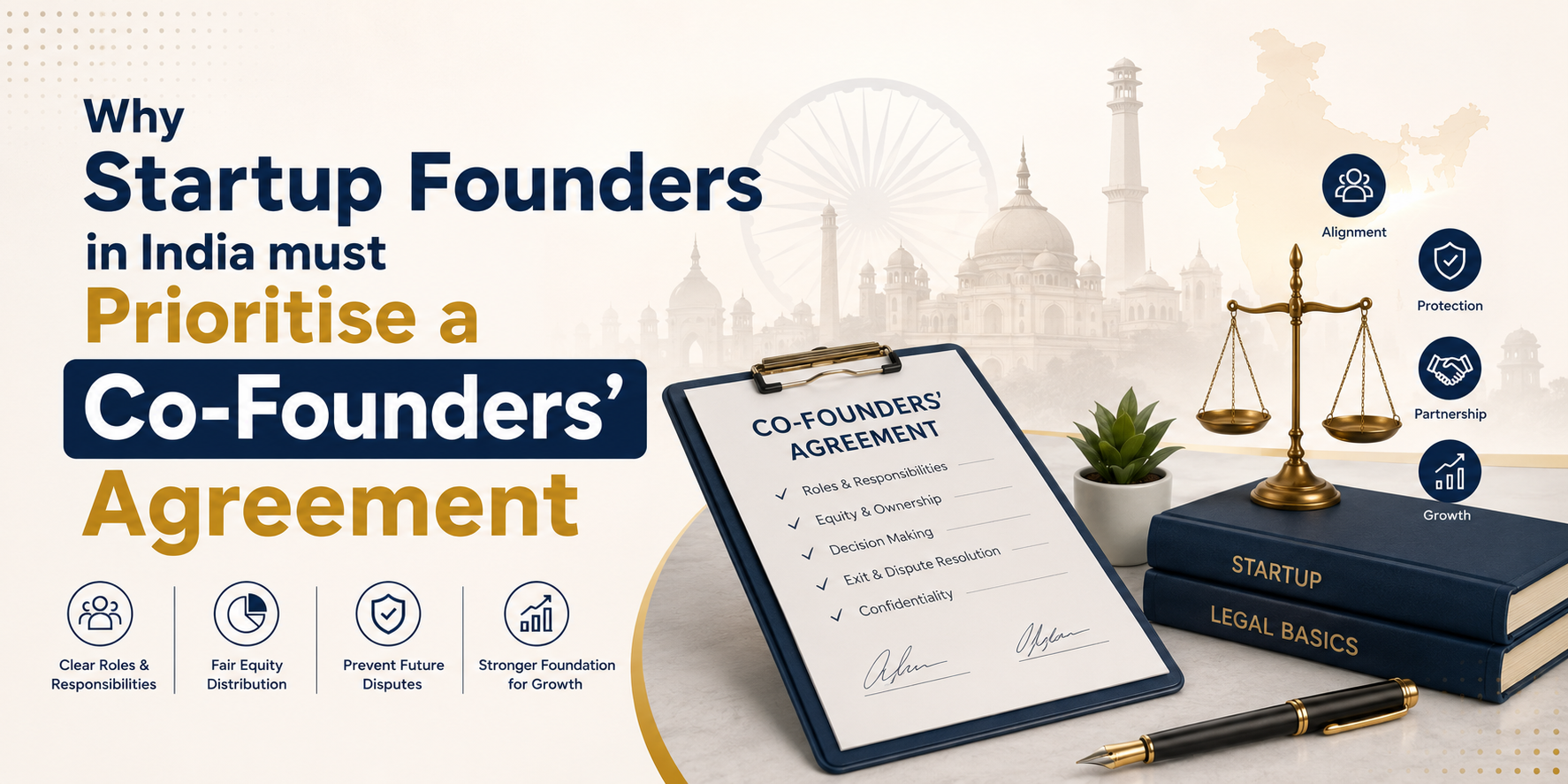
In the early stages of building a startup, founders are often focused on product development, funding, and growth. Legal documentation tends to take a backseat. However, overlooking a co-founders’ agreement can be a costly mistake. A co-founders’ agreement is not just a formality, it is a foundational document that defines how the startup will function. It clearly lays down each founder’s roles, responsibilities, decision-making powers, and expectations. This clarity becomes especially important as the business evolves and pressures increase.
From a legal perspective, the real value of such an agreement emerges during disputes. Disagreements among founders are not uncommon. A well-drafted cofounders’ agreement provides a structured mechanism to resolve conflicts, reducing uncertainty and protecting the business from disruption.
What is a Co-Founders’ Agreement?
A co-founders’ agreement is a legally binding contract between the founders of a startup. It records their mutual understanding on key aspects such as:
- Roles and responsibilities
- Ownership and authority
- Rights and obligations
The primary objective is simple: prevent misunderstandings before they arise.
In India, this agreement can be made legally enforceable by:
- Executing it on non-judicial stamp paper;
- Paying the applicable stamp duty (which varies from state to state); and
- Ensuring it is duly signed by all founders
Key Clauses Every Co-Founders’ Agreement Must Include and their Significance:
For startup founders, having a co-founders’ agreement is only half the job; the real value lies in what the agreement actually covers. A well drafted document ensures clarity from day one and significantly reduces the risk of disputes later. Here are the essential clauses every startup should include:
- Roles and Responsibilities
Clearly defining each founder’s role, scope of work, and decision-making authority is critical. Ambiguity at this stage often leads to friction. A structured allocation of responsibilities ensures smoother operations and accountability. - Equity and Ownership
The agreement must specify the equity split among founders, along with details of:
– Initial contributions (financial or otherwise)
– Future investments
– Ownership dilution, if applicable - Intellectual Property (IP) Rights
Startups often derive their value from intellectual property. The agreement should:
– Clarify ownership of all IP created during the business
– Ensure founders assign IP rights to the company, especially in newly incorporated entities
This is crucial for investor confidence and long-term scalability. - Vesting and Buyout Mechanisms
To ensure long-term commitment, founders’ equity should ideally be subject to a vesting schedule. Additionally, the agreement should include buyout or transfer clauses for situations where a founder exits, whether voluntarily or otherwise. - Confidentiality Obligations.
Founders must agree to maintain strict confidentiality of proprietary information, including business strategies, financial data, and trade secrets. This protects the company’s competitive advantage. - Termination of a Founder
The agreement should clearly outline grounds for removal, such as:
– Misconduct or unethical behaviour
– Misappropriation of funds
– Harassment or policy violations
Having predefined conditions ensures fairness and reduces legal uncertainty. - Exit Strategy
A clear exit framework helps avoid chaos during transitions. This includes:
– Exit rights of founders
– Share transfer procedures
– Valuation mechanisms
A structured exit process ensures continuity of the business.
Conclusion
Clear agreements build stronger startups. For startup founders, a co-founders’ agreement is more than a legal safeguard. It is a strategic tool for stability and growth. By addressing key aspects such as ownership, control, and exit mechanisms upfront, founders can focus on building the business rather than worrying about and resolving conflicts.