
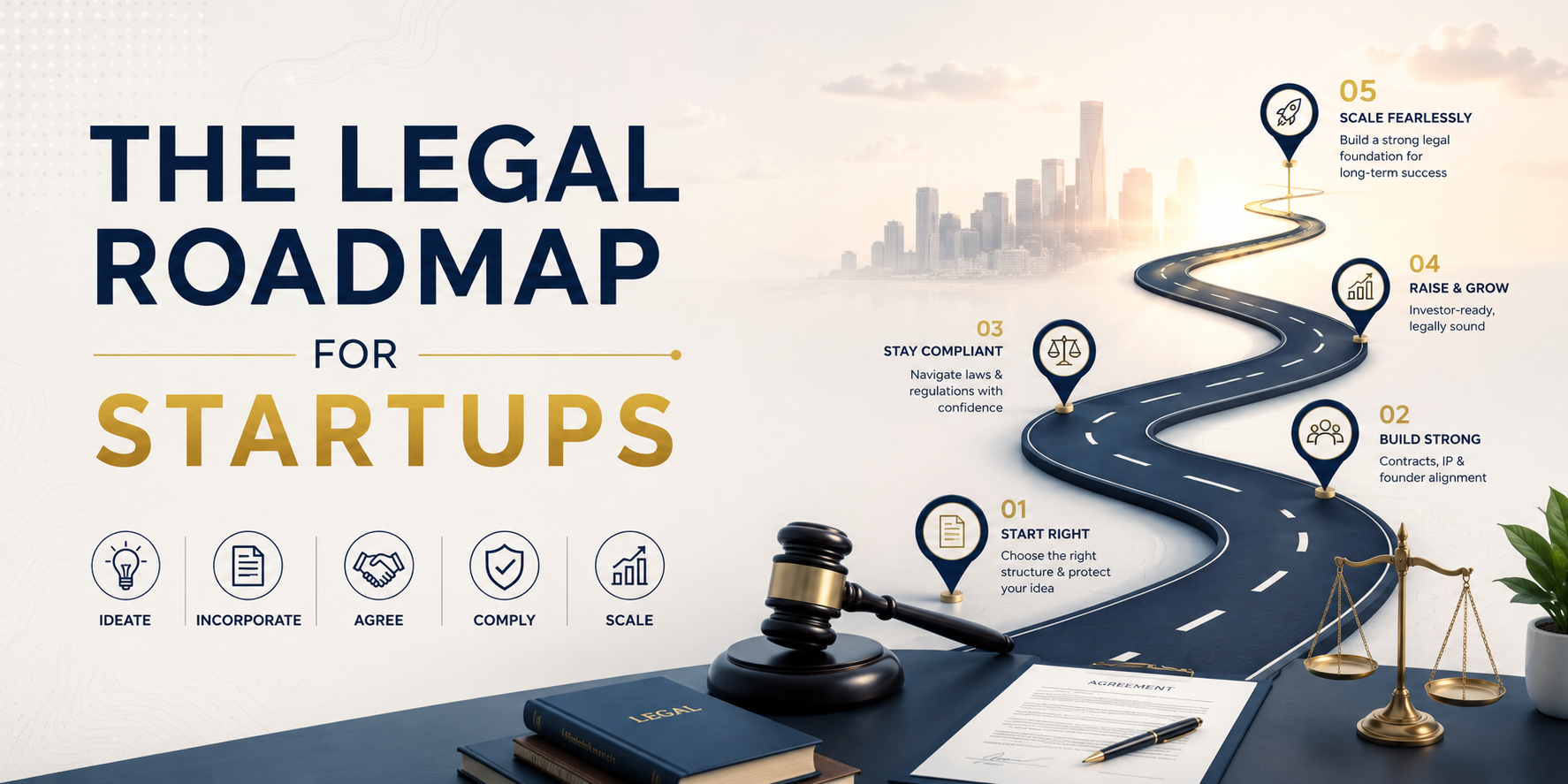
Starting a business is exciting—but navigating the legal side of things can feel overwhelming. For founders, especially in the early stages, understanding key legal requirements is not optional. It is essential for compliance, risk management, and long-term growth.
This guide breaks down the most important legal considerations every startup in India should address from day one.
Choosing the Right Business Structure
Your choice of business structure directly impacts liability, taxation, fundraising ability, and compliance requirements.
Common options in India include:
- Sole Proprietorship
- Partnership Firm
- Limited Liability Partnership (LLP)
- Private Limited Company
- Public Limited Company
Each structure has its own advantages and regulatory obligations. Seeking legal advice at this stage ensures you choose a structure aligned with your business goals and scalability plans.
Intellectual Property Protection
For many startups, intellectual property (IP) is their most valuable asset. Whether it is your brand name, logo, product design, or software, protecting it is critical.
Key steps include:
- Trademark registration for brand identity
- Copyright protection for content and software
- Patent registrations
- Use of Non-Disclosure Agreements (NDAs)
Proper IP protection not only prevents misuse but also strengthens your position during fundraising and expansion.
Adherence To Labour Laws And Legislations
As your team grows, so do your legal responsibilities. Indian labour laws are designed to protect employee rights and ensure fair workplace practices.
Startups must be mindful of regulations relating to:
- Minimum wages and timely payment of salaries
- Equal remuneration
- Employee safety and working conditions
- Maternity benefits and compensation
Non-compliance can lead to penalties and reputational risk, making early compliance a smart investment.
Information Security and Data Protection Regulations
In today’s digital ecosystem, data is one of the most critical asset and a legal responsibility.
Startups must comply with laws such as:
- The Information Technology Act
- The Digital Personal Data Protection (DPDP) framework
This involves:
- Secure data storage and processing practices
- Protection against data breaches
- Regular cybersecurity assessments
Strong data protection practices not only ensure compliance but also build user trust and credibility.
Drafting and execution of vital Contractual Agreements
Well-drafted contracts form the backbone of a legally secure startup. Founders should prioritise:
- Incorporation and charter documents
- Employment agreements
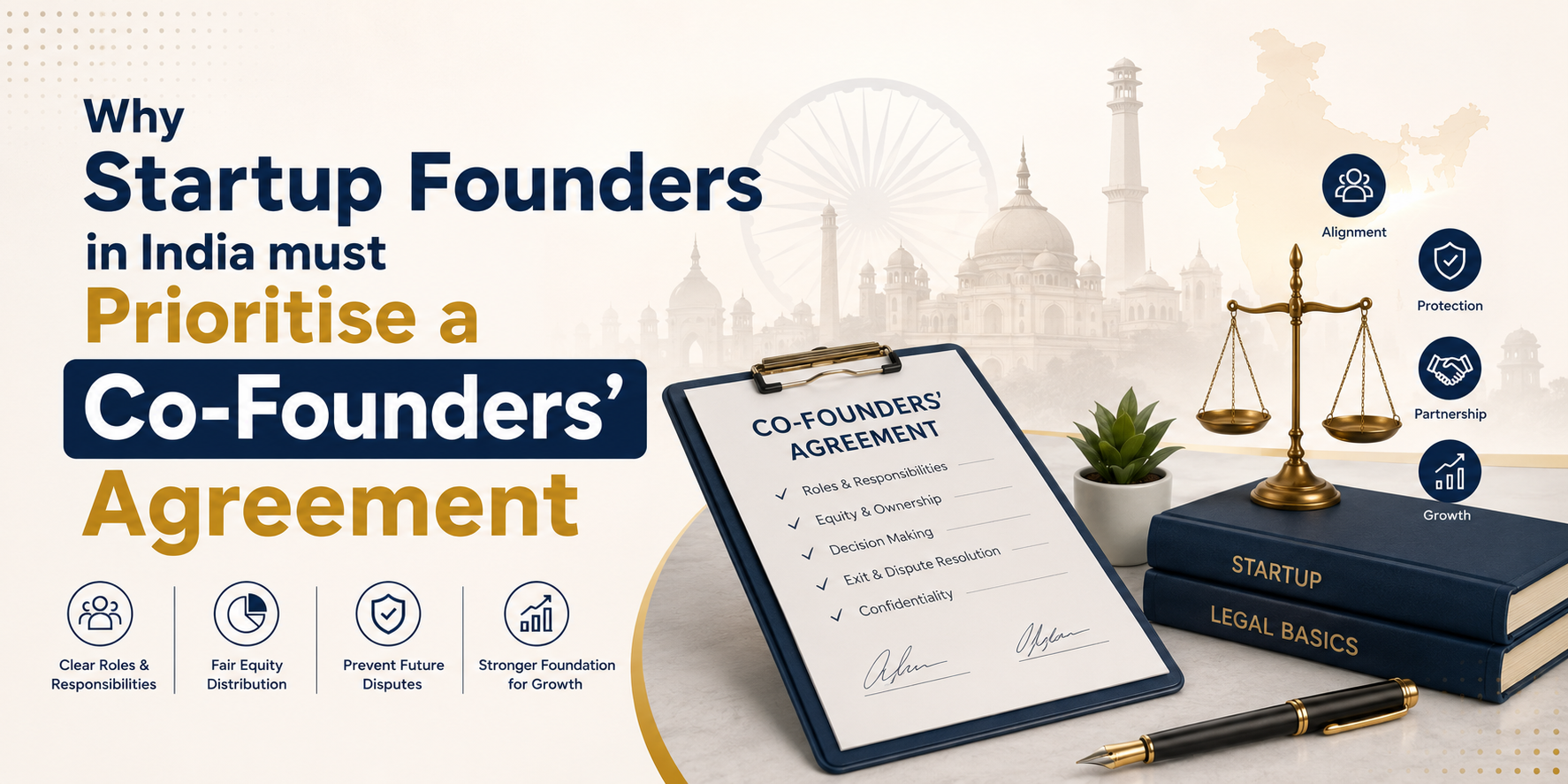
- Co-founders’ agreements
- Non-compete, non-solicitation and exclusive agreements
- Confidentiality Agreements
- IP Agreements
- Funding agreements
Engaging legal counsel ensures that these documents are accurate, enforceable, and aligned with your business interests, especially during funding rounds or disputes.
Conclusion
A startup’s success is not driven by innovation alone, it also depends on strong legal foundations. Ensuring proper documentation and regulatory compliance from the outset helps avoid costly mistakes and future disputes. For founders, the takeaway is simple: investing in legal clarity early enables smoother growth later.
For in-depth insights, visit our website!